
Okay — quick confession: I judge blockchain tools by how fast I can find a transaction and whether the UI doesn’t make me roll my eyes. Really. Solscan passed that test the first time I tried it. Whoa! At first glance it’s clean, fast, and annoyingly useful; then you dig in and realize it packs a surprising set of features that, frankly, some heavier explorers lack.
Short story: Solscan is a Solana blockchain explorer that balances speed with depth. You can look up addresses, transactions, tokens, program activity, NFT mint details, and cluster stats without waiting. My instinct said “this will save time” — and it did. Initially I thought it was just another block explorer, but then I started using the advanced filters and on‑chain token analytics and—aha—there’s real value there.
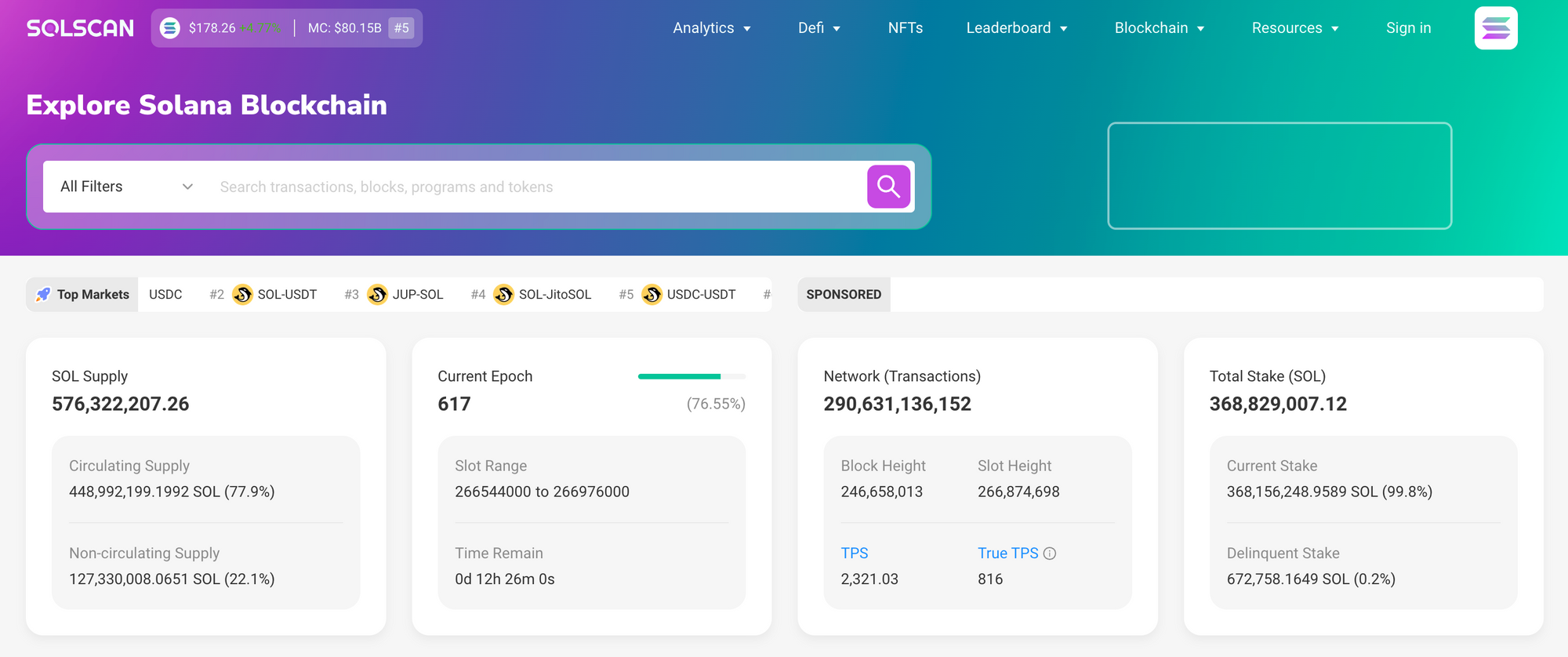
What Solscan does well
Solscan puts the essentials front and center. Search by address, transaction signature, token mint, or program ID. The response is snappy. You get decoded transaction instructions, inner instructions, and fee breakdowns — all in one view. It’s the kind of tool where you click something and you don’t immediately regret your choice. That matters when you’re debugging a smart contract call or tracking an NFT transfer in real time.
The UX leans practical: charts for slot/time activity, token holders list, and a clean transfer history. There’s also cluster selection if you need devnet or testnet views, which is very handy when you’re building or testing. I used it extensively while troubleshooting a token swap in devnet; it let me follow inner instructions that other explorers just hid.
How I use it — real workflows
When I’m checking a suspicious transfer, I do three things fast: inspect the transaction signature, expand decoded instructions, and check related token transfers. Hmm… sounds simple, but not every explorer makes those three steps painless. Solscan usually does.
For NFT work I look up the mint and then hop to the token metadata. If the collection uses Metaplex, Solscan surfaces the URI and the linked metadata quickly, though sometimes the external metadata host is slow — that’s not Solscan’s fault. On the dev side, I rely on the program logs view and the ability to see inner instructions when a cross-program invocation happens. Honestly, that saved me hours once when a CPI was failing silently.
Security and trust — things to watch for
I’ll be honest: a block explorer is a read-only window, so the risk surface is low. Still, it’s very very important to use the official site and verify you’re not on a phishing clone. One safe place to start is the solscan explorer official site — it’s the canonical entry point I use when I’m unsure.
Beyond the site itself, pay attention to metadata URIs and off-chain resources. Some NFT projects point to hosted content that can be removed or changed; Solscan will show you the URI, but you should verify the content source if provenance matters. Okay, so check host health, and keep receipts (transaction IDs) for any official claims — that stuff matters in disputes.
Advanced features developers actually care about
Developers: Solscan gives you decoded instruction breakdowns, which is a real time-saver during debugging. There are also program analytics, token holder snapshots, and a way to trace transactions involving specific program IDs. On the rare occasions I needed raw logs, Solscan provided them cleanly — no weird clutter.
One caveat — some deeply technical analytics aren’t as exhaustive as the data you’d get by running an indexer yourself. If you need complete on-chain history for analytics at scale, a self-hosted solution or using RPC + indexing is still the gold standard. On one hand Solscan is super convenient; on the other hand it’s not a replacement for bespoke data pipelines when you need exhaustive historical analytics.
Practical tips and tricks
Bookmark frequently used addresses. Seriously? Yes. If you’re watching a validator or a high-value treasury, add it to your quick list. Use the token holder view to spot concentration — that can flag rug-risk or whale actions. Also, the inner instructions are the place to look when a transaction seems to do less than it ought to: those tiny nested calls often hold the clue.
Oh, and by the way… if you’re building, test on devnet first and switch clusters in Solscan to inspect your test transactions. It sounds obvious, but I’ve seen teams skip this and then scramble when mainnet fees bite. Also, sometimes the explorer caches data briefly — reload if something looks stale.
solscan explorer official site — when to use it
Use it for quick forensic checks, for verifying transaction details before calling a support ticket, or when you want to confirm token distribution and holder counts. If you need to trace complex CPI chains or inspect runtime logs, Solscan is often faster than the alternatives. My bias is toward tools that get me answers fast; Solscan fits that bill most days.
FAQ
Is Solscan free to use?
Yes. Browsing transactions, addresses, and token data on the public explorer is free. There may be rate limits on heavy programmatic access, and if you need large-scale API access you should check their official docs or contact the team for commercial options.
Can I rely on Solscan for forensic evidence?
As a human-readable record, yes — transaction signatures and on-chain state are immutable. Use the transaction signature as your primary proof. But for legal or audit-grade evidence, pair explorer views with RPC-derived exports or node-based archival data to be extra certain.
How current is Solscan data?
Generally near real time. There can be small delays during extreme network congestion or maintenance. If you need immediate confirmation for a critical transaction, checking an RPC endpoint directly alongside the explorer is a safe habit.